Navigating New Construction: The Definitive Due Diligence Checklist for 2026
The allure of a never-lived-in home is undeniable—smart technology, superior energy efficiency, and that pristine "new house smell." However, purchasing in a developing community is a vastly different legal and financial beast than buying a resale property.
To protect your equity and your sanity, you must look past the staged lifestyle of a model home. Here is the expert-vetted criteria for evaluating a new construction community before you sign a binding purchase agreement.
1. The "First Visit" Rule: Why Independent Representation is Non-Negotiable
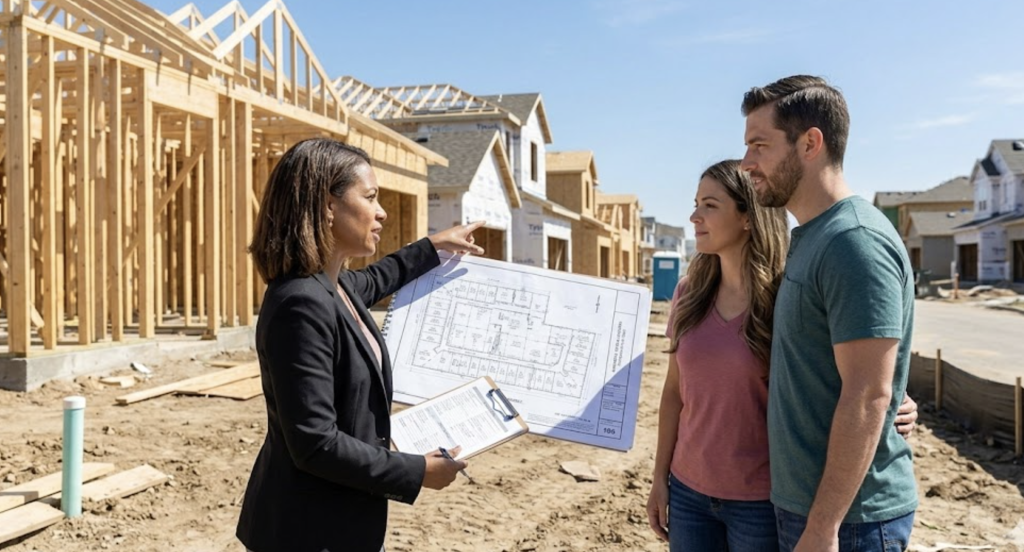
The most critical mistake a buyer can make is walking into a model home without their own real estate agent. The friendly person behind the desk in the sales office is the Builder’s Agent. They are an employee of the developer with a fiduciary duty to maximize the builder's profit—not to protect your interests.
- Registration policies: Many builders have a policy that your agent must accompany you or be registered at or before your first visit, and some will decline to recognize outside representation afterward. This is builder policy, not law, and it varies by builder and by community — some are strict, some are flexible, some have no such rule at all. Do not assume either way: before you tour, ask that specific builder what their registration policy is and get the answer in writing, because if a strict one applies you may be negotiating a construction contract without your own representation.
- On the assumption that skipping an agent saves money: It may or may not. How a builder budgets for and pays buyer-agent compensation varies by builder and by market, and since the 2024 changes to how broker compensation is handled, it is negotiated rather than assumed. Whether declining representation actually lowers your price is a question to put to that builder directly — and worth weighing against going through a construction contract, an upgrade sheet and a walkthrough process without anyone advising you.
2. The "Standard Features" vs. "Model Upgrades" Audit
Model homes are built to showcase maximum potential, and are often loaded with upgrades that are not in the base price — sometimes a very large sum of them. Without a detailed spec sheet, you might find yourself moving into a home that looks significantly different than the one you toured.
- The Pro Move: Request a "Standard Features Summary" in writing. Specifically, verify if landscaping, window treatments, and kitchen appliances are included. In many new developments, even a backyard fence or a refrigerator is considered an "add-on."
3. Decode the Master Plan and Zoning Maps
That peaceful wooded view behind your lot might not stay wooded for long. Developers often hold "future phase" land that could eventually become high-density apartments or commercial retail.
- The Pro Move: Don't just rely on the glossy sales brochure. Visit the local planning and zoning office to view the final plat map. Check for "easements" on your specific lot—these can restrict where you build a pool or a deck later on.
4. Vet the Builder’s Performance History
A builder’s brand is only as good as their last three projects. In a market where labor and material costs fluctuate, you need to ensure your builder is financially stable and committed to quality.
- The Pro Move: Search local records for "Construction Liens" or pending litigation against the builder. Additionally, drive through a community the builder finished 3–5 years ago; look for signs of premature wear, such as foundation cracks or siding failure.
5. Analyze the HOA’s Long-Term Viability
In a new community, the builder usually controls the Homeowners Association (HOA) until a specific percentage of homes are sold. This can lead to "artificially low" dues that spike once the residents take over management.
- The Pro Move: Review the CC&Rs (Covenants, Conditions, and Restrictions) specifically for "Declarant Rights." Ask if there is a reserve study in place to ensure the community can afford to maintain common areas 10 years from now without a massive special assessment.
6. Scrutinize "Escalation Clauses" and Timelines
Modern builder contracts often include clauses that allow them to pass increased material costs (lumber, steel, concrete) onto the buyer—even after the contract is signed.
- The Pro Move: Have your agent negotiate a "Price Cap" on escalation clauses. Ask whether a completion deadline can be written in, and what happens if it passes. You have no right to cancel or to recover your deposit unless your contract gives you one — builder contracts frequently allow generous extensions for delays, and a remedy you assumed is there is worth nothing if it is not in the document. Have a real estate attorney read the contract before you sign it.

7. Leverage Incentives Without Sacrificing Terms
Builders often offer "flex cash" or interest rate buydowns if you use their "preferred" lender. While these can be attractive, they are sometimes offset by higher loan origination fees.
- The Pro Move: Get a Loan Estimate (LE) from an independent lender first. Use that as leverage to ensure the builder’s "incentive" is actually a net gain for you, not just a marketing shell game.
Frequently Asked Questions
Is a home inspection necessary for a brand-new house? Absolutely. Many structural issues or HVAC errors are hidden behind brand-new drywall. You should schedule a Pre-Drywall Inspection and a Final Walk-Through with an independent inspector who works for you, not the builder.
What is a "Spec Home" vs. a "To-Be-Built"? A spec home is already under construction with pre-selected finishes, often offering faster move-in dates and more negotiation leverage. A to-be-built home allows for full customization but carries a higher risk of timeline delays.
How does the builder warranty work? A "1-2-10" structure — roughly one year on workmanship, two on mechanical systems, ten on major structural defects — is a pattern you will see described often, but warranty terms are set by the builder and by state law, and they differ in what they cover, what they exclude, how claims must be made and how disputes are resolved. Read the actual warranty document rather than assuming a structure, ask what is excluded, and confirm whether it transfers if you sell.
Final Thought
Buying in a new community is an investment in a lifestyle. By performing deep-dive due diligence and arriving with your own professional advocate, you transition from a "hopeful buyer" to a "strategic homeowner."